.jpg)
What’s All the Hype Behind Lab Grown Meat?
- mcclements
- Nov 19, 2020
- 4 min read

By Nikolas Rodriguez
November 18th, 2020
Does lab grown meat sound like something you would jump for joy buying at your local grocery store. Interestingly, it's something that has been studied for many years. Lab grown meat has become quite the oddity, boasting benefits such as being environmentally friendly and ethically sound, yet several hurdles still stand in its way1. Prior to jumping into the topic though, how is lab grown meat made and what exactly is it?
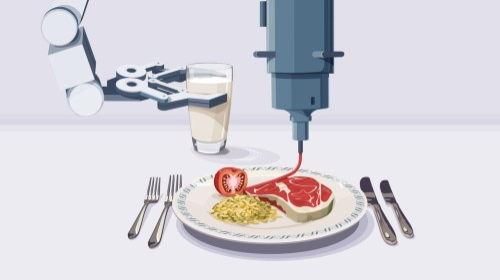
Lab grown meat starts from a stem cell, an uncharacterized cell which can regenerate, generate new stem cells, and grow to become a multitude of characterized cells with unique functions. Specifically, the stem cell is known as a satellite cell, originating from skeletal muscle of the animal in question. This satellite cell is then turned into a myoblast, a cell which is found in muscle tissue. Using properly cultured media is vital for growth. For example, fetal bovine serum was commonly used in plant-based beef, sourced from the fetus of cattle. The fetal bovine serum contains several important compounds, such as growth hormone, yet does risk contamination via pathogens. Artificial based media has implemented as an alternative. Afterwards, the cell turns to a myocyte, which combined with others, form a myotube. This process will generally require the aid of a bioreactor, which can help growth. Scaffolding is also used to aid this process, where many biomaterials can be used to create the porous or lattice structure. Utilization of soy, cellulose, or collagen to act as a scaffolding for the cells to grow on is common. From here, the tubes can be shaped to resemble meat1,2,3. This meat, known by many aliases such as lab grown meat, in vitro meat, and cultured meat, is believed to be an advancing technology which can revolutionize the meat industry1.
One of the greatest reasons’ customers consume more meat is for protein, which lab grown meat is jam-packed with, yet, on the flip-side, health reasons are also cited for declines in normal meat consumption when considering red meat. When consumers purchase meat, claims of “all-natural” and “no additives” are largely on their mind; as are convenience and taste4. The taste of lab grown meat may be a bit off considering the cells are purely muscle, currently leaving scientists no other option but to incorporate some form of fat into the meat to mimic taste and texture. There may also be need to use synthetic compounds to boost the taste of meat and preservatives to aid shelf-life1. Taken together, lab grown meat now contains not only the components people try to avoid to improve health, but may do so in a way that makes it more unappealing than traditional meat.
But it can’t be all bad can it? Let's consider beef. Cattle are extremely environmentally unfriendly, emitting over 200 pounds of methane per year per cow simply by belching5. As the theory goes, if we remove cows, we could see drastic improvements in environmental health. By replacing several cows for slaughter with one which we can pull stem cells from, we would eliminate a large ethical concern6. The problem is, it is not that simple. Scientists have claimed the carbon dioxide produced by processing lab grown meat would be worse than other meat alternatives, such as plant-based meat. To top that, only under optimum conditions can lab grown meat production produce less harmful environmental greenhouse gasses than traditionally raised cattle7,8.
In spite of these challenges, several companies have taken on the endeavor of manufacturing lab grown meat. Shiok Meats may be the first company to launch lab grown group shrimp to the market9. Supermeat, located out of Israel, is attempting to create lab-grown poultry, boasting the Kosher label10. Memphis Meats, known for making lab grown beef meatballs and fried chicken, is working to develop a feed for their cells which does not utilize fetal bovine serum. Since fetal bovine serum is sourced from the fetus of cattle, the usage of artificial media is heavily prefered11. Dr. Mark Post, founder of Mosa meat, developed the first lab grown burger, along with his team, in 2013. The total cost at the time: €250,00012.

Several advances toward sustainable lab grown meat have made great headway, potentially ushering in dramatic changes to global markets and agriculture at large. Economic challenges do present themselves, yet hope is high. If consumers actively purchase lab grown meat, producing it should become easier and easier3. Mosa meat believes that not so far in the future, they can produce their meat for around $1112. Customer perception will possibly play the largest role in lab grown meat excelling. The debate of synthetic vs natural foods will continue to rage on, all while juggling the ethical concerns of animal slaughter. Taste will significantly impact consistent purchases, spurring further research that will inevitably drain the wallets of companies and entrepreneurs if customers aren't willing to spend their hard-earned money on such novel creations. Proper marketing and policy may be able to help the commercialization of lab grown meat, yet customers will inevitably decide lab grown meats fate.
References
Swartz E. (2017). The Science Behind Lab-Grown Meat. Authorea. doi:10.22541/au.151294163.34502176
Ryan J. Lab-grown meat built on soy scaffold tastes and smells just like beef. CNET. https://www.cnet.com/news/lab-grown-meat-built-on-soy-scaffold-tastes-and-smells-just-like-beef/. Published March 30, 2020. Accessed November 5, 2020.
Gaydhane MK, Mahanta U, Sharma CS, Khandelwal M, Ramakrishna S. Cultured meat: state of the art and future. Biomanufacturing Reviews. 2018;3(1). doi:10.1007/s40898-018-0005-1
Mintel. Packaged red meat - US. March 2019. Available at: https://reports-mintel-com.silk.library.umass.edu/display/919334/?fromSearch=%3Ffilters.category%3D21%26freetext%3Dfood%2520sales%26last_filter%3Dcategory#. Accessed November 11, 2020.
Cows and Climate Change. UC Davis. https://www.ucdavis.edu/food/news/making-cattle-more-sustainable/. Published February 3, 2020. Accessed November 6, 2020.
Pierrehumbert RT, Eshel G. Climate impact of beef: an analysis considering multiple time scales and production methods without use of global warming potentials. Environmental Research Letters. 2015;10(8):085002. doi:10.1088/1748-9326/10/8/085002
Newburger, E. As the lab-grown meat industry grows, scientists debate if it could exacerbate climate change. CNBC. https://www.cnbc.com/2019/10/19/lab-grown-meat-could-exacerbate-climate-change-scientists-say.html. Published October 23, 2019. Accessed November 6, 2020.
Lynch J, Pierrehumbert R. Climate Impacts of Cultured Meat and Beef Cattle. Frontiers in Sustainable Food Systems. 2019;3. doi:10.3389/fsufs.2019.00005
The first lab-grown meat for sale could come from this Singapore startup that's re-creating shrimp. Los Angeles Times. https://www.latimes.com/food/story/2020-10-08/lab-shrimp-meat. Published October 8, 2020. Accessed November 9, 2020.
Tobin A. The Israeli startup that lets you eat meat - without eating the animal. Haaretz.com. https://www.haaretz.com/israel-news/business/enjoy-your-chicken-supermeat-style-without-the-meat-1.5409695. Published April 10, 2018. Accessed November 9, 2020.
Kauffman J. Cellular agriculture: Growing meat in a lab setting. SFChronicle.com. https://www.sfchronicle.com/food/article/Cellular-agriculture-Growing-meat-in-a-lab-11118533.php. Published May 3, 2017. Accessed November 9, 2020.
Saigol L, Keown C. Is cell-based meat the next big thing? Here are 5 companies leading the revolution. MarketWatch. https://www.marketwatch.com/story/is-cell-based-meat-the-next-big-thing-here-are-5-companies-leading-the-revolution-2020-10-06?mod=hp_minor_pos19. Published October 8, 2020. Accessed November 9, 2020.


Comments